
Why am I still buying Game Boy cartridges?
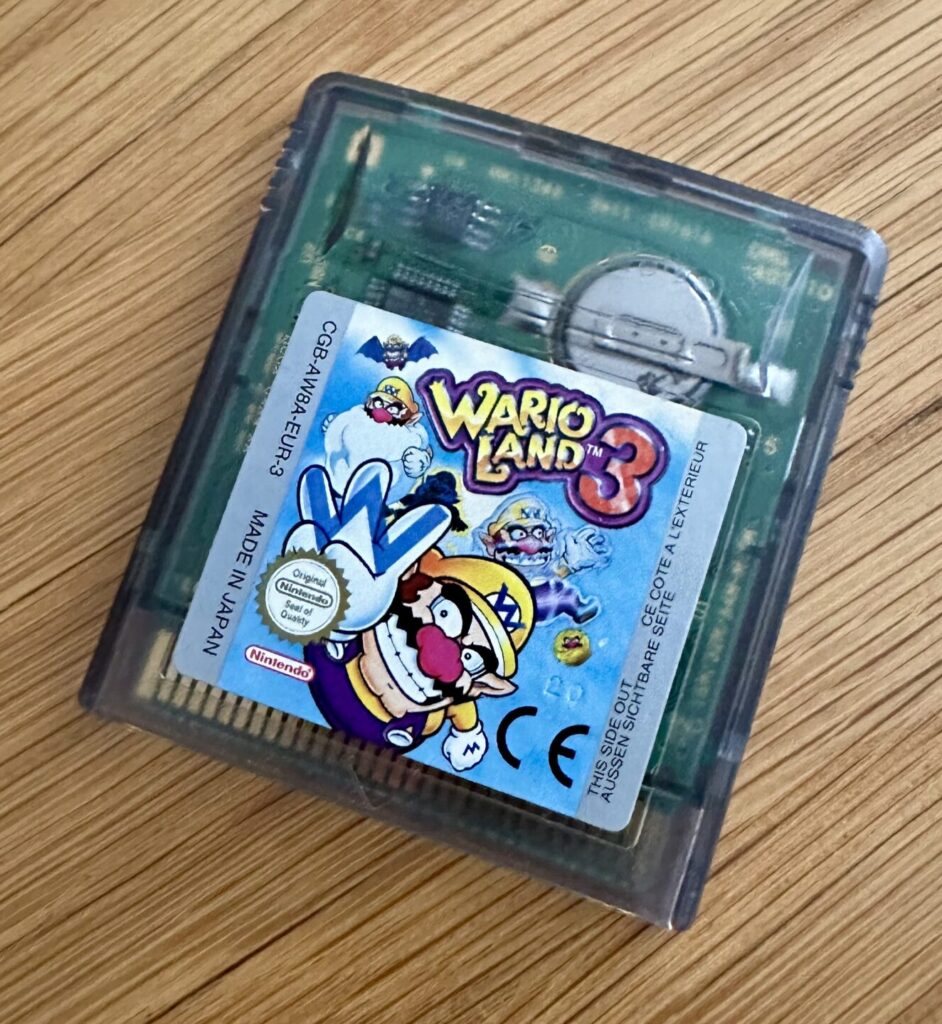
Nintendo discontinued the original Game Boy more than twenty years ago, yet this week I bought another game on eBay.
The obvious question is why. I can emulate retro games on computers, retro handheld devices and even my phone using WebRCade. In some respects, emulation is actually a better experience than original hardware. I can overclock the CPU, improve frame rates, translate Japanese games into English and even play colour ROM hacks of games that were originally monochrome.
So why buy the cartridges?
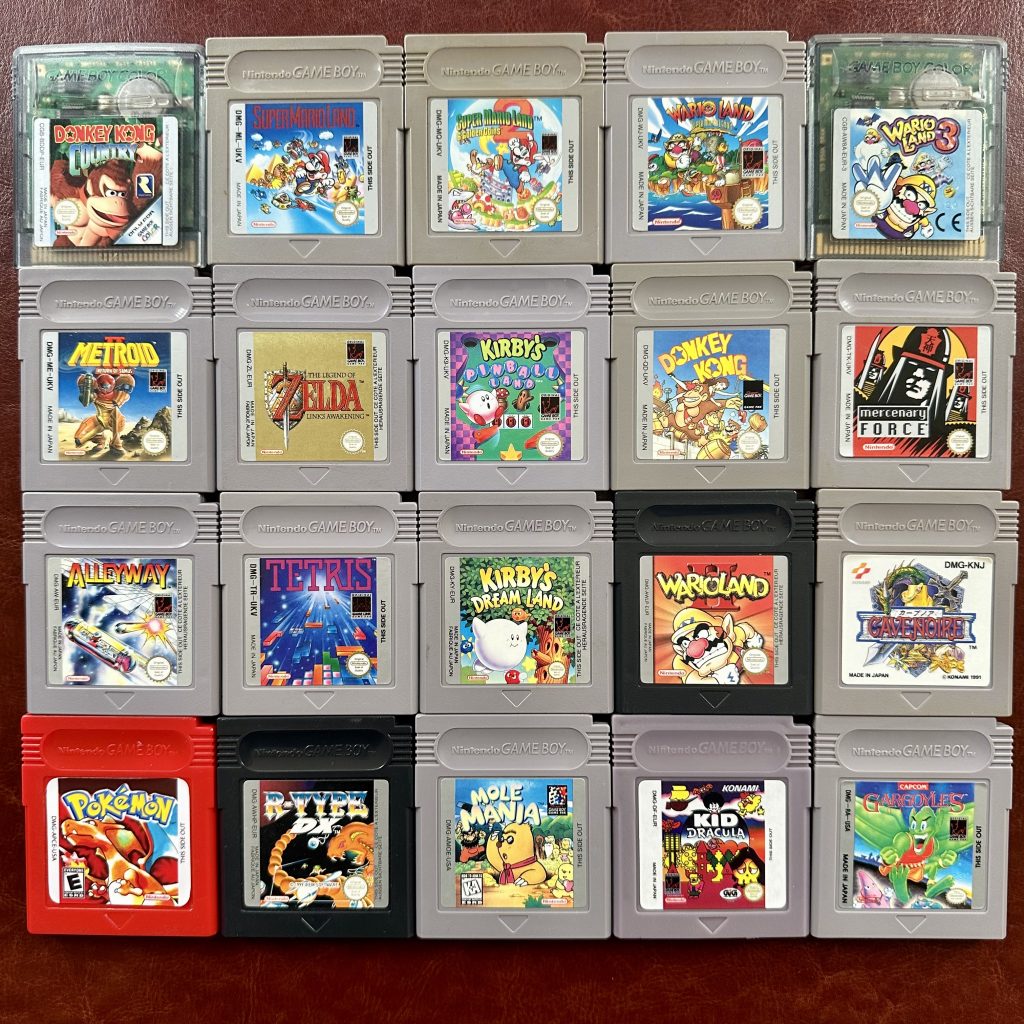
The answer is that, recently, I decided I wanted to rebuild a collection of the Game Boy games I used to own, along with some of the best games I missed the first time around. Emulation has its place, but I wanted the physical collection too.
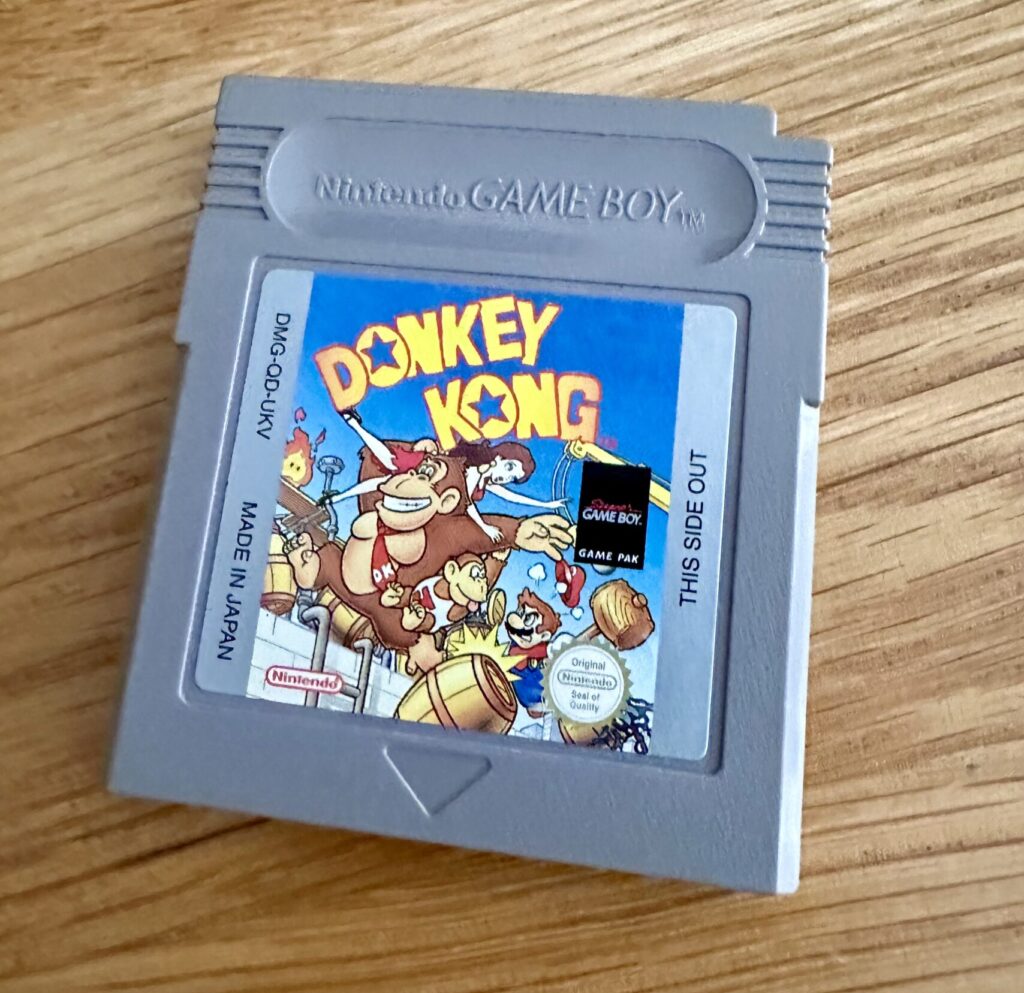
Part of the attraction is the cartridge itself. They are small, roughly 6cm square, and usually have a large, colourful label advertising the game. Perhaps this is nostalgia, but I really like the way a stack of Game Boy cartridges looks.
There is also a connection to the hardware. When I was in college, I had an original DMG Game Boy and collected a few games to go with it. Some were genuine classics, and I enjoyed owning the physical objects almost as much as playing the software stored inside them.
The DMG was very well designed. It was built from tough ABS plastic, with a set of apparently decorative lines running around the top. These turned out to have a purpose: they acted as rails for accessories, allowing them to slide into position and lock securely to the console. I remember being impressed by the thought that had gone into the design when I first encountered third-party accessories that used them.
The DMG was deliberately low-spec. Nintendo had designed it to be reliable and robust, while running for a reasonable amount of time from four AA batteries. It was ideal for carrying around in a coat pocket and playing The Legend of Zelda between classes or on the train.
Eventually, newer consoles came along and I gave my original DMG away.
Until recently, my handheld collection consisted of a Nintendo DS, Nintendo 3DS, Game Boy Advance SP and Game Boy Micro. I had one or two original Game Boy cartridges and used the SP to play them. The Game Boy Micro isn’t compatible with original Game Boy cartridges.
The problem with my SP is that it is the dim, front-lit AGS-001 model rather than the much better back-lit AGS-101. If I was going to start collecting and playing Game Boy games again in an era of retina displays, I wanted something with a decent screen. I also wanted to play the complete range of Game Boy and Game Boy Color games rather than being restricted to those compatible with the newer hardware.
I eventually found a modified Game Boy Color on eBay.
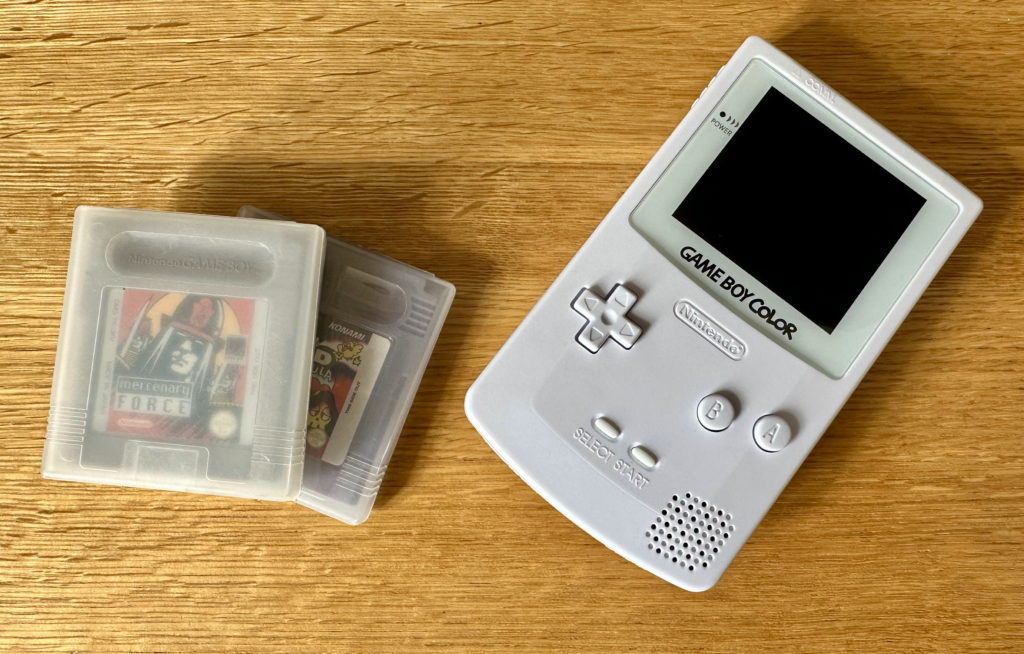
The console had been re-shelled in a new white case with white buttons, a colour combination that Nintendo never originally offered. It has a larger IPS screen, with touch controls for adjusting brightness and pixel effects, along with a backlit Game Boy logo that can change colour.
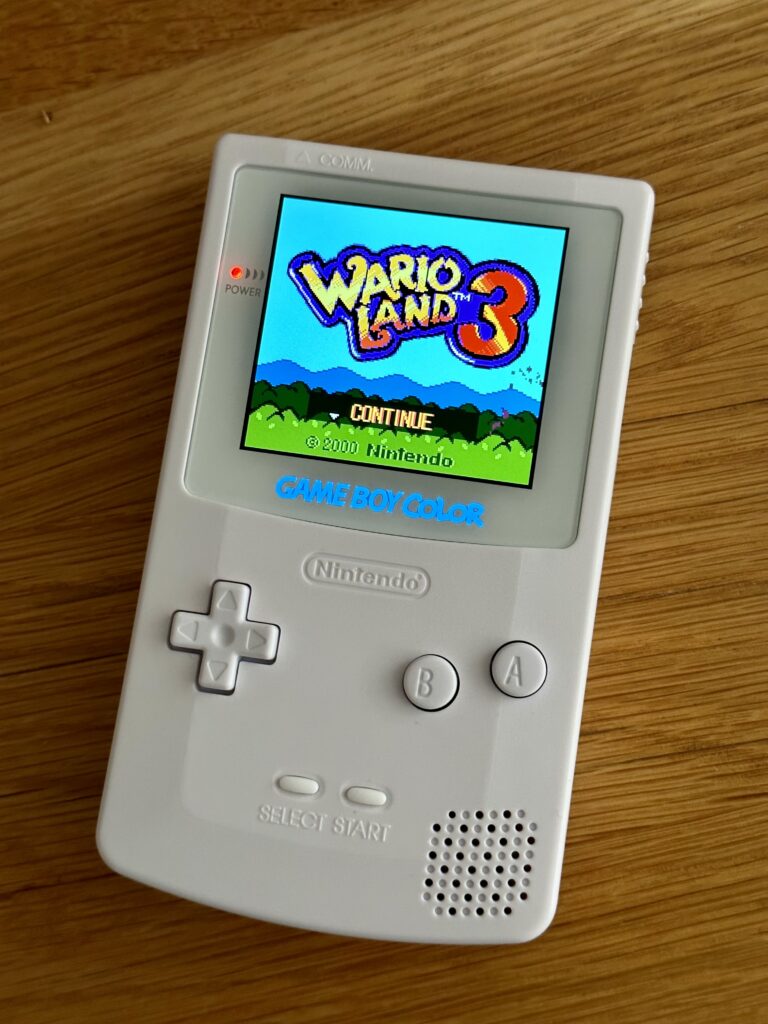
The internal power circuitry has also been upgraded to support the new screen. The white case and buttons give it a very clean, almost stripped-back appearance. I find it an unusually satisfying piece of hardware.
More importantly, it plays the whole Game Boy range: the original grey DMG cartridges, the black cartridges that bridge the DMG and Color generations, and the clear Game Boy Color cartridges. It also manages this with two AA batteries rather than the four required by the original DMG.
The screen is the biggest improvement. It is bright, sharp and colourful, and the games look remarkably good on it, as the photograph shows.
The replacement shell is also surprisingly good. The plastic is thick, tough and nicely textured, and feels much closer to original Nintendo plastic than the cheap third-party cases I have encountered elsewhere. It doesn’t feel like a replacement shell.
The audio isn’t quite as good. There is a faint whine that becomes noticeable when the volume is low. I’ve seen modifications involving one of the capacitors that are supposed to eliminate the noise, but I’d like to see more evidence that they work before taking the console apart.
With the hardware sorted, the collecting could begin.
I have a saved search on eBay, and when I have a few idle minutes I like to see what Game Boy cartridges are currently being offered. The search is restricted to Game Boy and Game Boy Color titles and sorted by auctions ending soonest.
I generally don’t bid on anything that still has more than a few hours to run unless it is something particularly special. There is something oddly satisfying about finding a good cartridge sitting unnoticed in an auction with very little time left.
I’m being reasonably selective. I’m looking for top-tier games: AAA titles, first-party releases and highly rated rarities. I’m usually buying loose, unboxed cartridges. Complete-in-box collecting is a different level of obsession, and I don’t have any particular desire to store all those boxes. My cartridges will live in their individual clamshell cases on a shelf.
I’m also not particularly concerned about the condition of the electronics.
If the save-game battery has failed, that’s fine. I have a stock of tabbed replacement cells and I’m quite happy to clean the contacts and solder in a new battery. Some cartridges don’t reliably boot when they arrive anyway. In those cases, I’ll open the shell and clean the contacts with a glass-fibre pen and some isopropyl alcohol. More often than not, that brings them back to life.
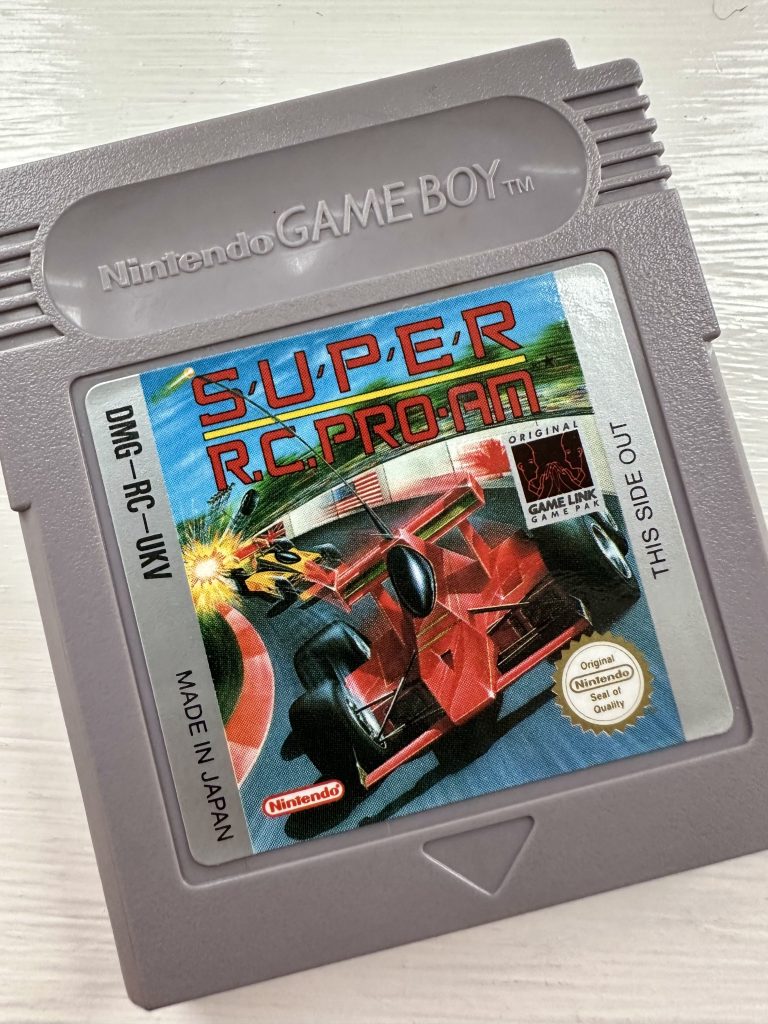
I look for clean, decent examples, but I don’t mind buying a game with a damaged label if the price reflects it. Replacement labels are readily available, and I’m happy to restore a cartridge rather than pay a premium for one that has survived perfectly intact for thirty years.
I’m never going to sell these games, so I’m not concerned about whether a restoration affects their value. I simply want a clean, good-looking copy that I can play.
My copy of Pokémon Red is a good example. I bought it considerably cheaper than the going rate because the label was badly damaged. After cleaning the shell and replacing the label, it looks very good.
Let the Games Begin
There are a lot of Game Boy games. In fact, there are 1,046 of them, which makes deciding what to collect rather more difficult than simply buying the games I remember.
Fortunately, discovering the good ones isn’t difficult. The web is full of reviews, rankings and best of lists, and reading through them is almost as enjoyable as playing the games themselves.
The 30 Greatest Game Boy Games – Polygon
50 Best Gameboy Games of All Time – RetroDodo
50 Best Game Boy Games of All Time – Nintendo Life
And so the collection continues to grow.
Which, I suppose, is the answer to the original question.
I don’t need Game Boy cartridges. I don’t even particularly need a Game Boy.
But there is something satisfying about owning a small physical object containing a game that was designed more than thirty years ago, putting it into a piece of hardware that feels almost exactly like the one I remember, and pressing the power switch.
Emulation gives me the game.
The cartridge gives me the experience.